The Golden Hour
June 1st, 2017
The golden hour is commonly known to relate to a heart attack. But what does this actually mean and what happens to the heart during this period of time?
In a healthy heart, the heart muscle pumps blood throughout the circulation in order to provide the body with oxygen and nutrients. The heart requires blood as well to be able to perform this task. Two large arteries are the means by which the heart receives oxygen—these give way to smaller arteries which surround the heart (the coronary arteries) and deliver oxygen-rich blood. In an acute heart attack, the coronary vessels are blocked as a result of a previously formed arterial calcification (atherosclerosis) or via a spontaneously formed thrombus. The heart muscle receives too little oxygen, with the affected region dying after 20-60 minutes.
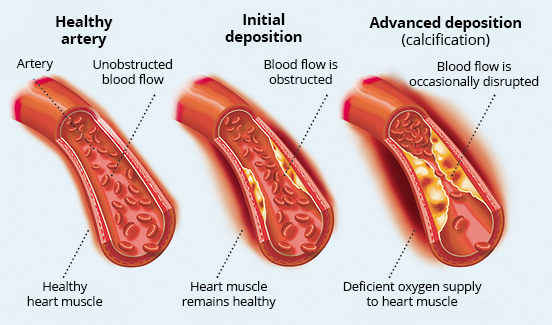
The golden hour begins when a vessel is completely blocked. Individuals affected have often already been experiencing symptoms for hours or ever days, with the presentation varying greatly from person to person. The intensity of symptoms does not provide any information about the severity of the event.
If the blocked vessel can be reopened within the golden hour, the chance of recovering without negative effects on the heart is high. Unfortunately, only 11% of heart attack patients receive the necessary intervention within the golden hour. The most common reason for this is that people delay in seeking medical attention. Being well informed and rapid, independent action are of great importance.
CardioSecur provides you with a recommendation to act in moments of uncertainty. This prevents you from losing valuable time within the golden hour and allows you to quickly receive medical treatment.
Learn more about „Heart attack symptoms among women“ and how CardioSecur can help you to recognize precursors of a heart attack at „How it works“.